 Oils
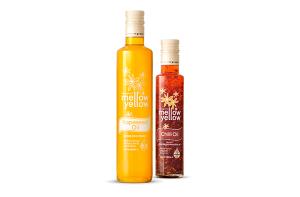
Oils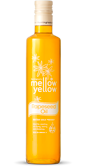 Rapeseed Oil
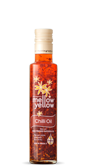 Chili Oil
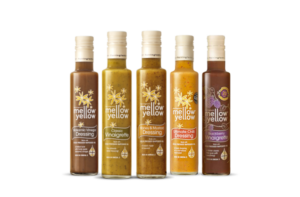 Dressings
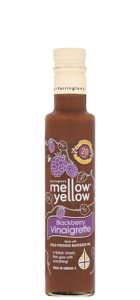 Blackberry Vinaigrette
 Classic Vinaigrette
 Balsamic Dressing
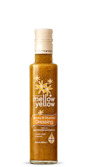 Honey & Mustard
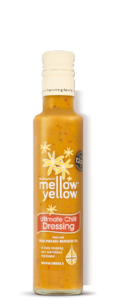 Ultimate Chilli Dressing
The environment is at the heart of everything we do here at Farrington’s Mellow Yellow and so it’s especially exciting when other companies focused on sustainability want to work with us! Fill Refill Co got in touch with us a while ago as they were looking for a local, eco-friendly, oil to use in a new soap product they were planning. After lots of work in their lab in Finedon (a stone’s throw from our farm), they have produced something really special!
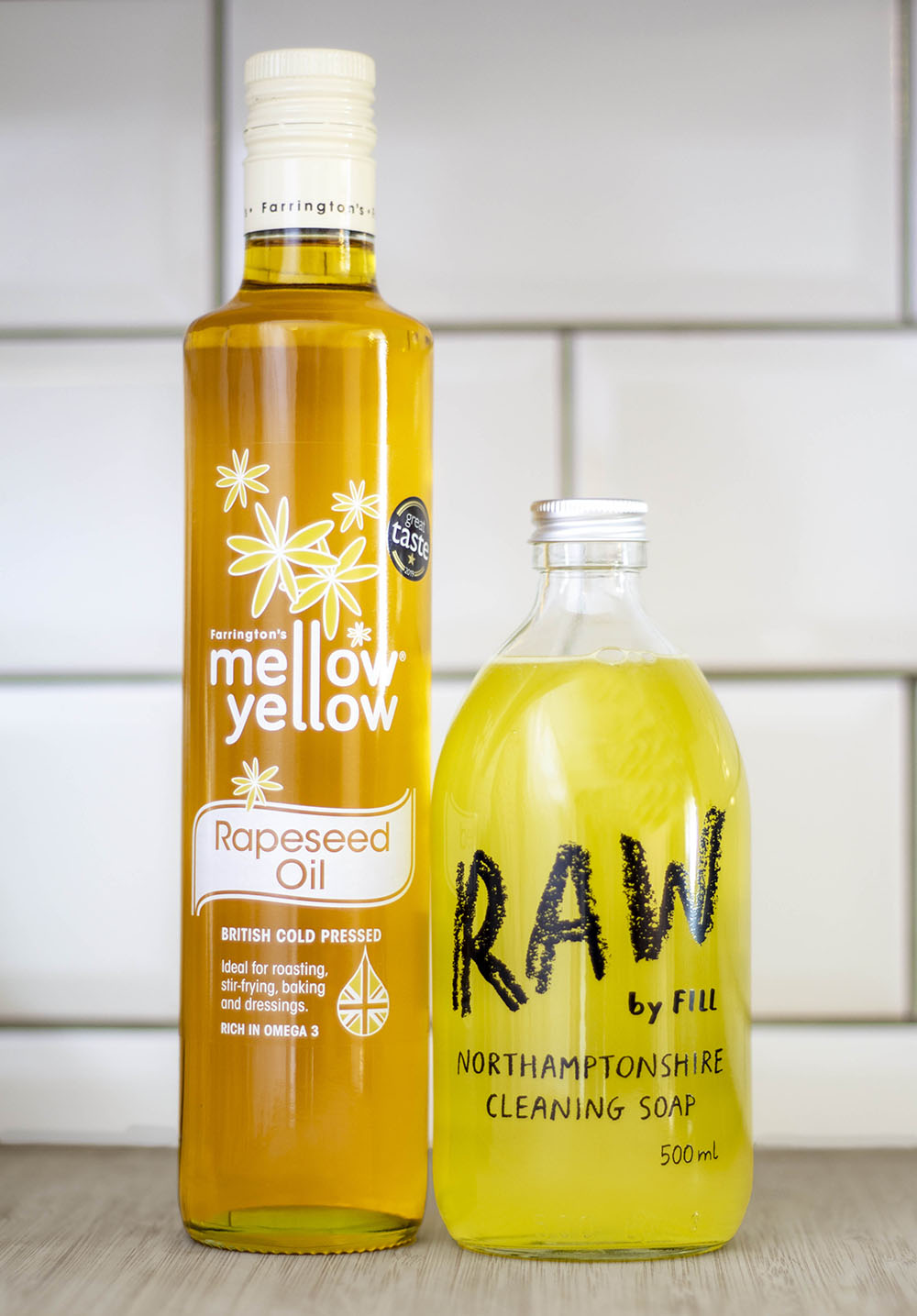
This month Fill Refill Co have launched their Northamptonshire cleaning soap which is made from our Mellow Yellow sustainably produced British cold pressed rapeseed oil. Given that we’re neighbours, both operating out of family-run businesses in Northamptonshire, and both sharing the same sustainability and eco-credentials, it made perfect sense to collaborate. We’ve caught up with Phil from Fill Refill Co to hear all about the new product…
“We wanted to make something from the most local ingredient we could find. Our factory in Northamptonshire is surrounded by golden rapeseed fields. We thought it would be cool to see if we could make a soap from it. We’d wanted to have a go at making Castile soap for a while, knowing that we used it at home and my wife wouldn’t use anything else to clean her make up brushes.
A while back we’d thought about shipping bulk olive oil from Cyprus (where my grandfather is from) or Crete (because their olive oil is pretty special) but rapeseed was growing all around us, so it just made sense and the proximity significantly reduces carbon footprint. Vicky & Alex did lots of work at the bench and we all took home a whole load of samples… we soon got to realise that it was making a really good alkaline cleaning soap, plus it had a lovely golden colour.
When we first went to visit Farrington’s we could see they were just as passionate as us about reducing plastic waste and we were so impressed with their site. They have a really nice set-up with a no-waste, carbon neutral production site, and all their crops are grown to LEAF Marque standards, a system designed to promote environmentally responsible and sustainable farming.
They quickly understood exactly what we were trying to do, so it was easy to get it rolling. Even better, we were able to get the rapeseed oil from them in a closed loop with bulk returnable packaging.”
Introducing Fill Refill Co’s Northamptonshire Cleaning Soap!
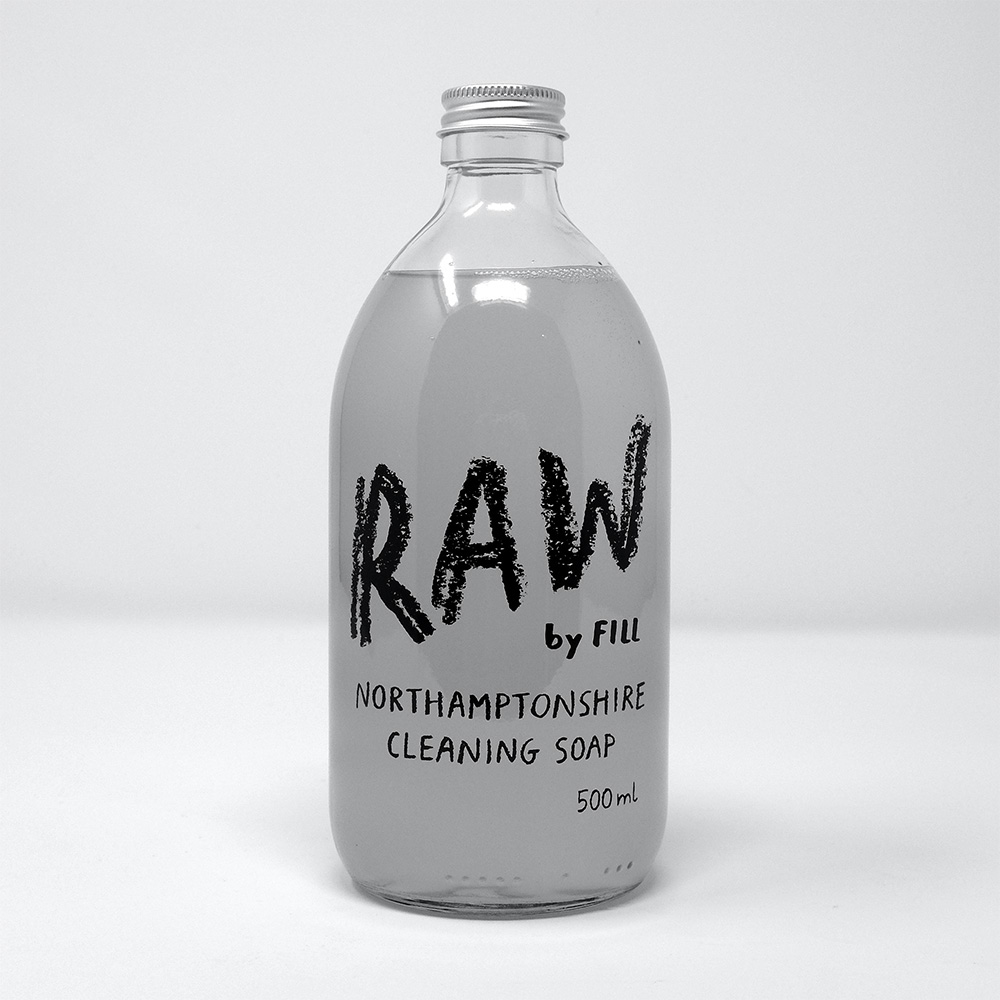
What is it?
An alkaline cleaning soap – pH 10!
What is it good for?
This stuff is versatile, it took us almost a year to perfect, but we don’t know of another rapeseed oil liquid soap out there that works like this. We think it’s good for making your own cleaning products, or for soft water laundry, degreasing, cleaning make-up brushes or paint brushes. It’ll help remove labels from jars, use as a soak for dirty delicates, or check out our recipe below for making the ultimate natural oven cleaner – just add salt, bicarb or the amazing Fill Scrub Powder.
Where does it come from?
Made from Farrington’s Mellow Yellow Cold Pressed Rapeseed Oil, grown just down the road from our factory, supplied in a closed loop, we turn it into bulk, plastic-free Northamptonshire liquid cleaning soap. We’re still finding out more things you can do with it!
What does closed loop mean?
Fill Refill Co are all about looking at ways to reduce and reuse. Whilst recycling might sometimes be the only option, we’re all about closing the loop wherever we can. Closed-loop supply simply put means circular, there is no waste, we just keep refilling, returning, refilling, returning – Fill, Clean, Repeat.

Like Farrington’s, the environment – and our impact on it – is at the heart of what we do. That and our passion for creating straightforward eco laundry and household cleaning products, that look cool, work great and reduce packaging waste.
Fill is for everyone who’s interested in a better way to clean. We make everything ourselves, in our factory, with real chemists combining biodegradable ingredients to create simple, modern and effective eco cleaning & laundry products. No dyes. No harsh chemicals. No plastic bottles. Less waste.
What to use your Northamptonshire Cleaning Soap for…
Cleaning Soap + Salt = Thick oven cleaner
Cleaning Soap + Bicarb = Slightly abrasive alkaline cleaning for cutting greasy deposits
Cleaning Soap + Scrub Powder (Clary Sage) = Removes burnt on dirt and debris
Find more cleaning recipes at https://www.falconenamelware.com/blogs/journal-entries/eco-cleaning-recipes-for-your-falcon
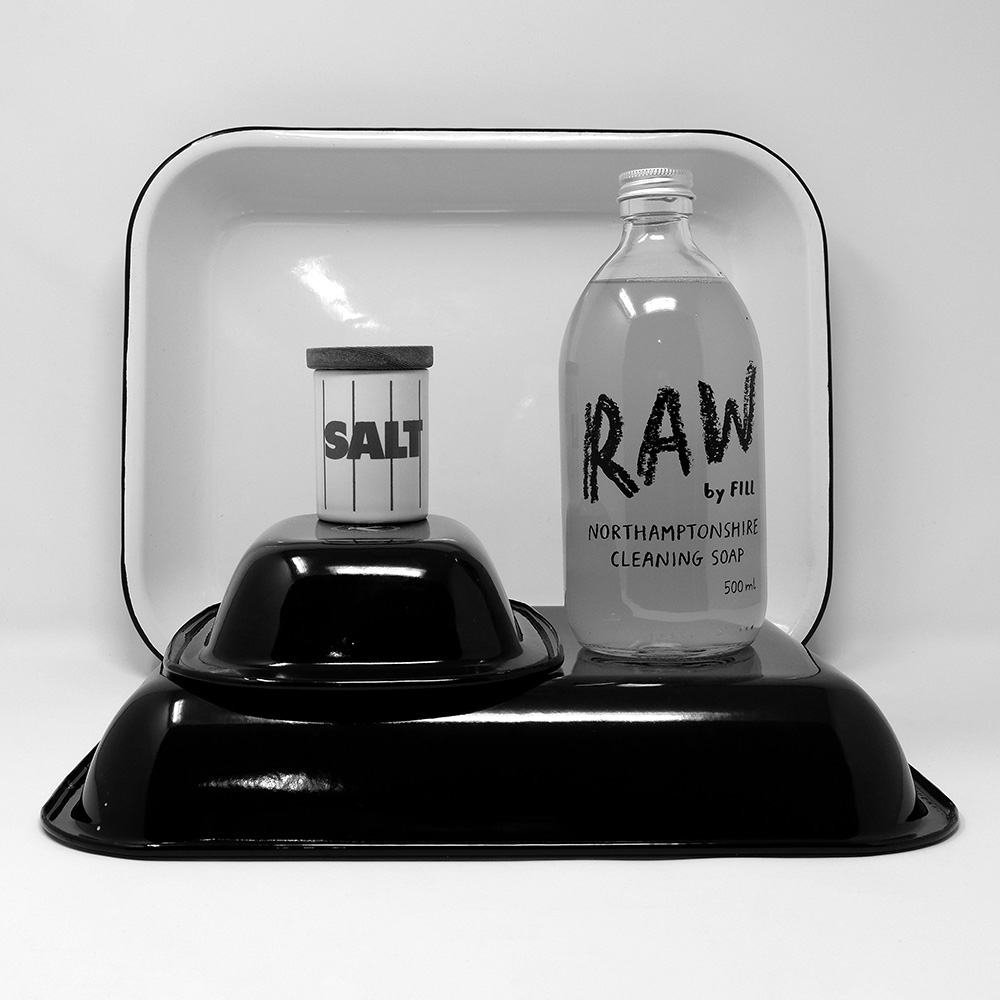
Cleaning recipes for Falcon Enamelware featuring the Northamptonshire Cleaning Soap
Check out the Northamptonshire Liquid Cleaning Soap from Fill Refill Co here and find your local stockist here.
A couple of weeks ago, Duncan Farrington was honoured to be included in the panel for the annual LEAF Conference. This is a showcase event normally held in the heart of the financial centre of London, bringing together LEAF members with their customers, journalists, international scientists and policy makers, to hear from speakers on the latest global sustainable issues of the day. This year was different as the conference had to take place online, yet it still was incredibly inspiring and allowed the panellists to share their sustainability goals for the future.
The conference was chaired by Tom Heap, BBC broadcaster with many years’ experience in agricultural journalism, and Duncan was joined by Minette Batters, chair of the National Farmers Union (NFU), Jonathan Wadsworth, lead climate change specialist at The World Bank and Chris Buss, deputy director of the International Union for Conservation of Nature (IUCN) Global Forest and Climate Change Programme.
Each of the panellists shared their sustainability stories, goals and wishes for the future. Here is what each one said, which you can watch via video if you prefer.
Duncan Farrington:
I am very proud that Farrington’s Mellow Yellow is the first food brand in the world to be certified as both carbon and plastic neutral. Having been a LEAF Marque farmer for many years, we are used to collecting data on such things as energy use, which is very helpful as a management tool, but I felt we could use this information as the basis of something bigger and importantly commercially rewarding which led to us becoming carbon neutral.
Through small changes, we have made big differences to our carbon emissions. By reducing the intensity of cultivation on the farm, our fuel usage has reduced 60% to 75%, a broader crop rotation has reduced nitrogen fertiliser usage by 13% and solar panels on our barn roofs generate 50% of our electricity. But the biggest gain has been in soil health from the sustainable techniques I have been practising for the last 22 plus years. I have shown through ongoing soil analysis how a particular field’s general soil health has improved, including soil organic matter which has increased by 75%. The net result has been the absorption of an estimated 300 tons of CO2 by one field alone every year. To put this into context, the total net CO2 removal on our farm is enough to off-set the emissions from around 2,400 Mellow Yellow Minis from UK roads each year. So sustainable agricultural soil management has a huge potential positive influence on climate change.
LEAF already do fantastic work as the trusted go-to organisation supporting sustainable food production and there is now an increasing commercial appetite for climate friendly food that LEAF can lead as a consumer facing organisation. This will drive the commercial success of LEAF farmers and growers, which in turn will deliver the step change in innovation and ambition required. Imagine the kudos and effect if LEAF was successful in winning an award from the Duke and Duchess of Cambridge’s Earthshot prize for championing a carbon friendly food system. That would drive real ambition!
My one climate change wish in the near future is to get an internationally accepted certification for soil organic matter. I am involved in an EU consortium hoping to look at how soils can be accurately evaluated on mass scale using satellite data for their soil carbon content. The ambition is to create a trusted certification, to help land managers explore how their actions can affect soil health, creating the financial and moral incentive to manage land in ways to drive the huge potential of carbon sequestration.
Minette Batters:
The game changer for government and political thinking around climate change is COP26. Farming has seen huge impact from ever more severe weather and farmers are already experiencing the impact of climate change. The NFU has set an ambitious target of net zero by 2040 because we really believe farmers can achieve this with the right incentives. We need to focus on more efficient and sustainable farming, and nobody has shown more leadership in this area than LEAF.
We also need to focus on more carbon storage. There is research into beetle banks that is interesting for example. There is a huge amount that can be done by farmers in carbon storage and this is key. Renewable energy is another big area of opportunity. It is incredibly important for a farm’s diversification to look into renewable energy.
There are a lot of challenges around diet. We need to engage with whole foods and nutrition, cooking from scratch and realising that health is dependent on our diet. We need to look at what we aren’t consuming that we can export too. We also need to revolutionise how we think about water. We need to move water around the country rather than letting diffuse water run into the sea. This needs a strong and ambitious working relationship with government.
My one climate change wish is that COP26 is a game changer, that agriculture rises to the fore across the world and we work together to ensure we are deemed an important part of the solution. Climate change is the challenge of our time and I passionately believe our farmers are the solution.
Jonathan Wadsworth:
The World Bank is an international development organisation with a role to reduce poverty and inequality by lending money to governments of poor countries to improve their economy and standard of living. Over the next 5 years, it will invest $200 billion in climate adaption and mitigation projects.
Progress has been uneven across regions and countries. Millions of people are being left behind, climate change exacerbates these inequalities. The poorest and most vulnerable are hardest hit. To have any hope of achieving sustainable development goals by 2030 we must adapt quickly to climate change and reduce emissions, with urgency. The greatest climate challenge at the moment is how to take action now.
The world food system does an amazing job. For the past 50 years, food production has outpaced population growth, adding $8 trillion a year to global GDP. If the food system was a country, it would have the third largest GDP in the world, behind China and the USA. But this performance comes at a high cost to people and the planet.
Our food system is both a victim and a culprit of climate change, but with the right incentives, approaches and innovations, we know it can be a big part of the solution. The good news is that more and more people are becoming more aware and starting to take action.
LEAF is an excellent example of farmers and researchers working together to find and promote climate-smart solutions. This approach merits being massively scaled up to become a real movement of change and the UK could play a major role.
Agriculture is the only sector able to capture carbon from the atmosphere and store it naturally in vast amounts. We must exploit that advantage fully.
The global food and agriculture system needs to deliver three main things:
– To reduce emissions that contribute at least 30% of the mitigation needed set out by the Paris Agreement.
– Widespread adoption of the planetary human health diet.
– More inclusive development
LEAF can play a key role in continuing to demonstrate what can be achieved and influence governments and investors to find the financial and the political will to support and facilitate a great agriculture and food system transformation.
If I had one climate change wish it would be that COP26 is a success and world governments would recognise that food and agriculture is indispensable for addressing the climate emergency.
Chris Buss:
I work around nature-based solutions and land use and protection of nature, restoration of nature and land production systems. Trees are key for farming systems; they bring nutrients into farming systems, regulate water, provide building materials and firewood. It is a win-win system so makes sense to bring trees into farming.
A great example of the role of nature is pollination. The loss of pollinators is estimated to have a net value of $150 billion to $160 billion. There is a loss to consumers by increased prices, but also a loss of profit to farmers too as they have to replace natural systems.
Success for nature would be farmers helping to make and shape policy. As they manage the land, they are closest to nature and are the key partners globally to help integrate nature into our agricultural systems and shape policies to make sure nature is included in their farming strategies.
One successful strategy that we are building with farmers globally, is working to restore land on-farm and off-farm, bringing trees back into the farming systems. This is critical as it provides farmers with more resilient land use systems, secures supply, sequesters carbon and is socially just.
Moving forward, technical support can be provided to farmers, support can be provided to decision makers going into climate change negotiations and we can build land restoration strategies.
LEAF’s 10 Year Strategy
After a lively Q&A session with Tom Heap, LEAF Chairman Philip Wynn and LEAF Chief Executive Caroline Drummond shared the new LEAF 10 Year Strategy. This is a continuation of their work in developing and promoting more sustainable agriculture through Integrated Farm Management. They are going to support the delivery of positive action for climate, nature, economy and society based on their core work and the principles of circular agriculture.
Their vision:
A global farming and food system that delivers climate positive action, builds resilience and supports the health, diversity and enrichment of food, farms, the environment and society.
The mission:
To inspire and enable more circular approaches to farming and food systems through integrated, regenerative and vibrant nature-based solutions, that deliver productivity and prosperity among farmers, enriches the environment and positively engages young people and wider society.
Their 2031 ambition:
LEAF’s ambition is to play a demonstrable part in transforming farming and food systems. Building on their work since LEAF was established in 1991, this will be through the agro-ecological and regenerative benefits of the whole farm, site specific focus of Integrated Farm Management to drive positive action for climate, nature, economy and society. Embracing circular agriculture with health, diversity and enrichment at the centre of all they do. Through the use of management tools, the harmonisation of metrics, technology, innovations, data and Artificial Intelligence, training, research, demonstration, market opportunity, education and engagement, they will support and contribute to the practical delivery of national and global commitment. This will include the Sustainable Development Goals (SDGs), the Paris Agreement and the Post-2020 Biodiversity Framework.
You can read the full plan here or watch this short video:
We’re so pleased to present Pestle Curry Pastes, a brand new brand that uses Mellow Yellow Rapeseed Oil as a key ingredient! We chatted to Neha, the founder of Pestle, about this exciting new venture…
First up, introduce yourself and your products!
Hi, I’m Neha Hampton, I’m a chef based in Sussex and I’m excited to share my new brand, Pestle. Pestle is a range of hand crafted curry pastes blended to capture the flavours of some our favourite dishes. This brand is not just about great food, it’s a journey of exploration fuelled by curiosity to look beyond what we know to uncover the stories of history, people and places with the aim to promote cultural unity.
How did Pestle start?
This year has presented us with many challenges and changed everything we know and love. Motivated by my desire to connect with people and share my love for food, I decided to turn a hobby of making fresh curry pastes into a small business. It all started in my local community and with a outpouring of support I decided to make it official and that’s how Pestle was born.
We’re so pleased to be used in your curry pastes. How did you first hear of Mellow Yellow and why did you choose to include us in your pastes?
I’ve been a fan and have used Mellow Yellow in my home for many years now – I love the slightly nutty flavour and the versatility with so many different cuisines. A lot of Indian curries involve slowly caramelising onions, garlic and ginger as a base and an oil with a high smoke point works best for this… Mellow Yellow is perfect and the colour reminds me of the mustard oil that my mum used to cook with. To say I was delighted to find out that it was available in larger quantities for businesses like mine is an understatement!
Your first range of curry pastes is called ‘Behind the British Curry’, can you tell us about the history of a curry in the range?
The love for curry weaves through many generations and Indian cuisine has firmly made it into the hearts and onto the plates of Britain.
The ‘Behind the British Curry’ range shares stories & flavours of the ancestral heritage of some of our favourite dishes. Vindaloo for example, is Goa’s most famous export… its origins however trace back to Portuguese traders in the 15th century who carried with them a dish called carne vinha d’alhos, pork marinaded in garlic and vinegar for their long journeys. The dish was adapted in Goa to local conditions and with no vinegar, they used palm wine and added local ingredients like tamarind, pepper & cinnamon. Chillies in fact arrived with Vasco De Gama in 1498 and eventually replaced or complimented black pepper as a source of heat in Goan cuisine.

How are your pastes made?
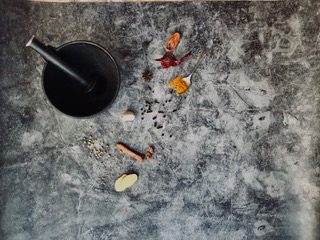
There’s essentially 3 stages – the first is caramelising onions, garlic and ginger in Farrington’s Mellow Yellow Cold Pressed Rapeseed Oil, the second is roasting and grinding my unique blend of spices and the third is bringing these together to form a paste. The aim is to make the cooking process for the customer simple and easy – you just add in a few ingredients, cook and voila, a super tasty meal.

We know the quality ingredients are important to you, other than our oil, can you tell us about any other special ingredients used?
Spices are a real foundation to my pastes and are an important part of the culinary heritage that we share all over the world. When developing my recipes I reflect on my travels & my own experiences of these dishes and I am looking to create as near to those moments as possible. This means creating the perfect balance and blend of spices and when developing recipes, literally adjusting each peppercorn up and down to get them perfect.
We love the packaging of your products, what inspired these beautiful designs?
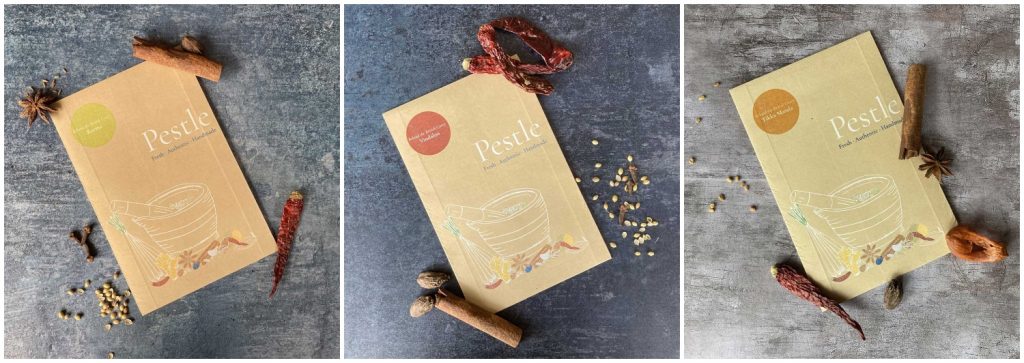
One of the pillars of the brand is the idea of ‘handmade’ so when it came to packaging I wanted to follow that theme. I wanted this to feel like something you could grow, like a packet of seeds and hence the envelope. The hand drawn illustrations are by a friend Mel @smithandwonder and we worked together to capture the essence of the Pestle and ingredients that go into each paste.
What is your favourite dish to cook (not including your own curry pastes)?
Wow, what a big question. As a fully obsessive foodie, I love cooking is every shape or form, from baking to making an omelette to elaborate fine dining. One of my favourite dishes to cook and eat is Bebek Betutu – a Balinese duck dish, which is covered in a spice paste and roasted for 4-6 hours at a low heat. I recently added in Farrington’s Mellow Yellow Oak Smoked Rapeseed Oil which adds the flavour and memory of the duck being slow cooked over a wood fire in Bali.
Where can we find your products and where can we follow you on social media?
You’ll find me on the socials @pestleltd – here you’ll see my journey of food and stories of people, places and history.
I recently launched with my first online retailer, The Ethical Butcher – you can buy pastes and meal kits where the pastes have been paired with incredible meats to give you a simple, easy and tasty meals at home. More retailers announcing very soon!
What’s coming next for Pestle?
This is my chapter 1 and so today I am focussed on expanding the brand and retailers. As the journey unfolds, I will be looking to expand production in my new studio kitchen and I’ve even started research and development for the next range of products. Watch this space 🙂
To buy Pestle curry pastes, visit The Ethical Butcher here.
Follow Neha on Instagram and Facebook.
The environment has always been at the heart of everything we do and we are so proud to be officially certified by the United Nations as carbon neutral, highlighting our commitment to sustainability.
What is carbon neutral?
Carbon neutral means achieving net zero carbon dioxide emissions by balancing carbon emissions with carbon removal (often through carbon offsets).
Many large companies and even governments have set carbon neutral goals, typically to achieve carbon neutrality within 10, 20 or even 30 years. Amazon have pledged to be carbon neutral by 2040, the UK government has said they aim to reach this milestone by 2050 and Delta, an American company, have pledged to become the first carbon neutral airline in the next 10 years.
All of these companies have given themselves plenty of time, which can be needed for big corporations. However, we knew that something needed to be done sooner than this. Thanks to our LEAF Marque audits, we have been monitoring our emissions for many years so were in a great position to become carbon neutral a lot sooner. Read on to find out how we became carbon neutral…
How did we become carbon neutral?
The first step was measure. This involved us looking at every part of our business, from each employee’s commute to work, to the amount of electricity used in our office and factory, to the fertiliser used on our fields. We calculated the greenhouse gas emissions from each and this gave us our carbon footprint.
We then signed up to the United Nations Climate Neutral Now Initiative Pledge. This pledge showed our commitment to measure, reduce and offset our carbon emissions. This pledge has been signed by many other companies and governments that are prioritising our environment and making a meaningful difference.
After measure, the next step was reduce. We are constantly working to reduce our emissions and through our LEAF farming practises, we are able to accurately measure this and continue to reduce them. Some of the ways we have reduced our emissions are:
– The installation of solar panels on our barn roofs in 2018 which now produce 50% of our total yearly electricity. In the summer months, we are producing a huge 80% of our electricity from the solar panels!
– We have dramatically reduced our fuel usage on the farm by stopping ploughing in 1998 and since then, have continued to reduce this further by using less fertiliser on our fields as the soil health increases and provides more nutrients to the crops. As well as reducing fuel usage, by stopping ploughing, we are actually locking in huge amounts of carbon dioxide into the soil, you can read more about this here.
– We use GPS systems on all our tractors to make them as efficient as possible, lowering our fuel usage and keeping emissions to a minimum.
– We use LED energy saving bulbs and timers on our lights to keep our electricity usage as low as possible too.
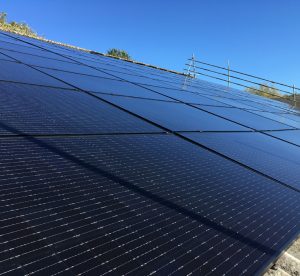
As we are a LEAF farm, we have a yearly audit to ensure we are doing the best to farm in harmony with nature, and we are always working to find new ways to reduce our emissions and our impact on nature!
The next step in our carbon neutral journey was to offset our remaining emissions. We used United Nations approved offsets and have been able to support a reforestation initiative in Uruguay and a United Nations clean energy project.
With this last step completed, we became certified as carbon neutral in January 2020 and received the Carbon Neutral Gold Standard from the United Nations!
What’s next?
Becoming carbon neutral is a fantastic achievement, but we aren’t going to stop there. We aim to be carbon negative, that means we will be absorbing more carbon from the atmosphere than we put into it, so we would be removing carbon rather than adding it.
In order to become officially certified as carbon neutral, we had to use the United Nation’s way of calculating net carbon emissions. this unfortunately meant we could not take into account all the incredible work we do with our soils as the carbon stored in soils is not yet officially recognised as a carbon store. From our own calculations, if this was taken into account, we would already be carbon negative!
Duncan is now involved in European project to find an internationally accepted, verifiable and certifiable method of measuring soil organic content on a continental scale, encouraging farmers and land managers to adopt carbon capturing methods improve their soil carbon content. The project aims to empower farmers to become agents of climate mitigation, where soil carbon and health will become a financial asset for the farmer and provide natural capital for the wider society by reducing global carbon emissions.
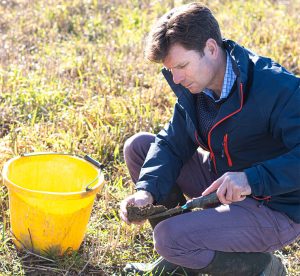
Every year at the start of August, farmers are encouraged to share their day online as part of 24 Hours in Farming #Farm24. We took part again this year and shared all the goings on from Bottom Farm.
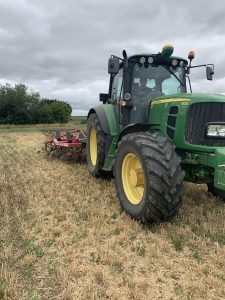
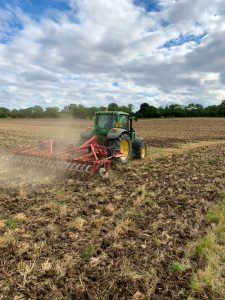
First, we headed out to find Marvin cultivating. This field was growing wheat this year which has now been harvested, we leave the wheat stubble in the field to biodegrade and nourish the soil. We are planning on planting beans in this field in October and beans need to be planted quite deep into the ground. Marvin has to cultivate the soil to loosen the top layer to make it possible for us to plant the beans. This is a big field and the cultivator needs to be driven quite slowly so this will take the majority of the day!
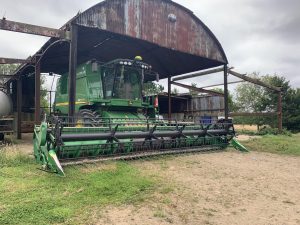
We then headed back to the farm yard, passing the combine harvester which is having a rest until the spring barley is ready to be harvested.

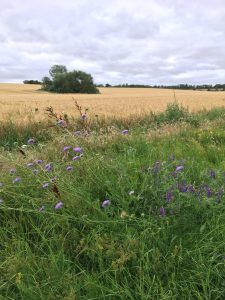
Here are the wild flowers we have growing around our spring barley. These flowers provide habitats for insects and is great for pollinators.
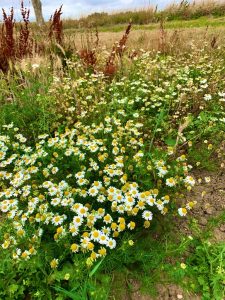
We even have these beautiful daisies in the wildflower meadow margins, and Duncan explained these are actually chamomile for making into tea!
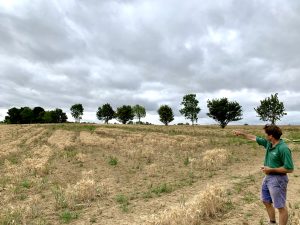
The last stop on our way back to the farmyard was these trees. Duncan planted them back in 1989 and they are just a few of the 8000 trees he has planted on the farm over the years.
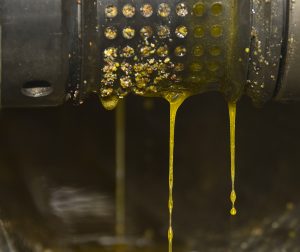
Heading into our rapeseed oil production area, we watched the team pressing and bottling our Mellow Yellow Rapeseed Oil. We cold press our rapeseed on our farm. Our presses run 24/7 to produce Mellow Yellow Rapeseed Oil for kitchens up and down the country! We call it the process of no process. Simply sow, grow, press and bottle!
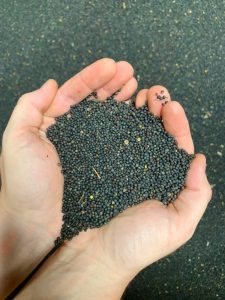
We harvested our rapeseed a few weeks ago and this what the little seeds look like. They’re bright yellow inside and packed full of delicious and nutritious oil!
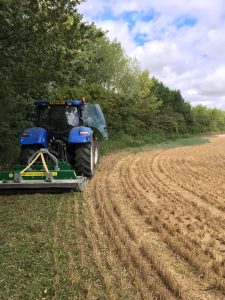
After lunch, Duncan headed out to do some mowing. Tidying up the edges of fields already combined and making sure the various public footpaths we have going through the farm are clear and accessible for people on their daily walks!
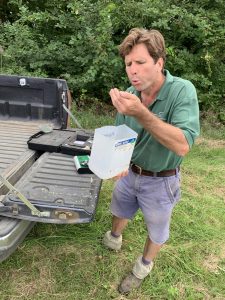
Before we harvest the wheat, we need to check the moisture content, still a few more days of sunshine needed for this field! Duncan is winnowing here – blowing air through the wheat to remove the chaff!
We then left Marvin finishing off the cultivating and that was our day!
We had a great time sharing our day on the farm and we hope you enjoyed getting an insight into British farming! See you next year!
This month is #PlasticFreeJuly and we thought it was the perfect opportunity to share our plastic neutral story…
The environment has always been at the heart of everything we do and earlier this year we took the next step in our sustainability journey and became plastic neutral! Don’t worry if you don’t know exactly what this means, read on and we’ll explain.
Becoming plastic neutral is a lot like becoming carbon neutral which is more commonly understood (and something we have also achieved, read more here) but the general idea is that we now fund the removal of the same amount of plastic from the environment as we use in our packaging, meaning Farrington’s Mellow Yellow is certified as plastic neutral.
MEASURE
The first step in becoming plastic neutral was to measure our plastic footprint. We looked at our products and how they are sent out and started listing all the plastic used at each stage. As our bottles are glass with a metal cap, there isn’t a huge amount of plastic on the product itself, but, for example, the label is plastic, as is the little pourer inside our cap. We also had to look at the way we send out our products. When sending large quantities of our glass bottles to supermarkets, we have to wrap each pallet in plastic wrap to stop breakages which would lead to food waste, so this plastic had to be counted.
Once we had a list of all the plastic used, we worked out how much each item weighed and how much of it we use in a year, and this created our yearly plastic footprint. With this figure, we had a really accurate representation of the amount of plastic that we, as a company, are putting into the environment each year. This is our plastic footprint.
OFFSET
Once we had our plastic footprint, we got in touch with rePurpose Global. rePurpose Global are a global community of conscious consumers and business that are committed to taking action against climate change.
rePurpose partnered us with a recycling project in India so that we could directly fund the removal of the equivalent weight of plastic as our plastic footprint.
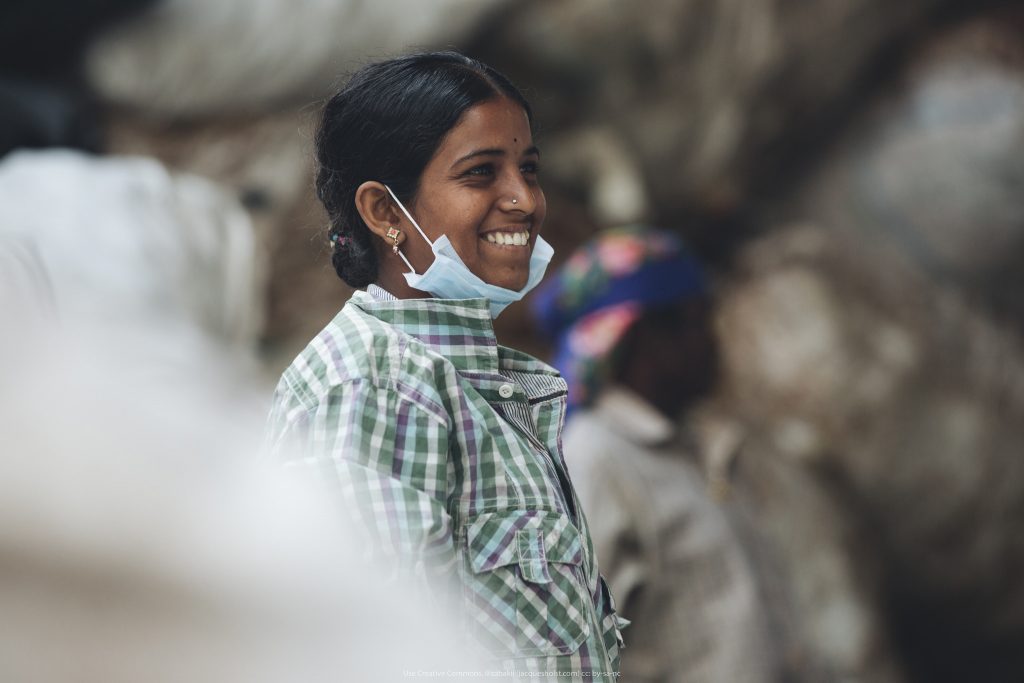
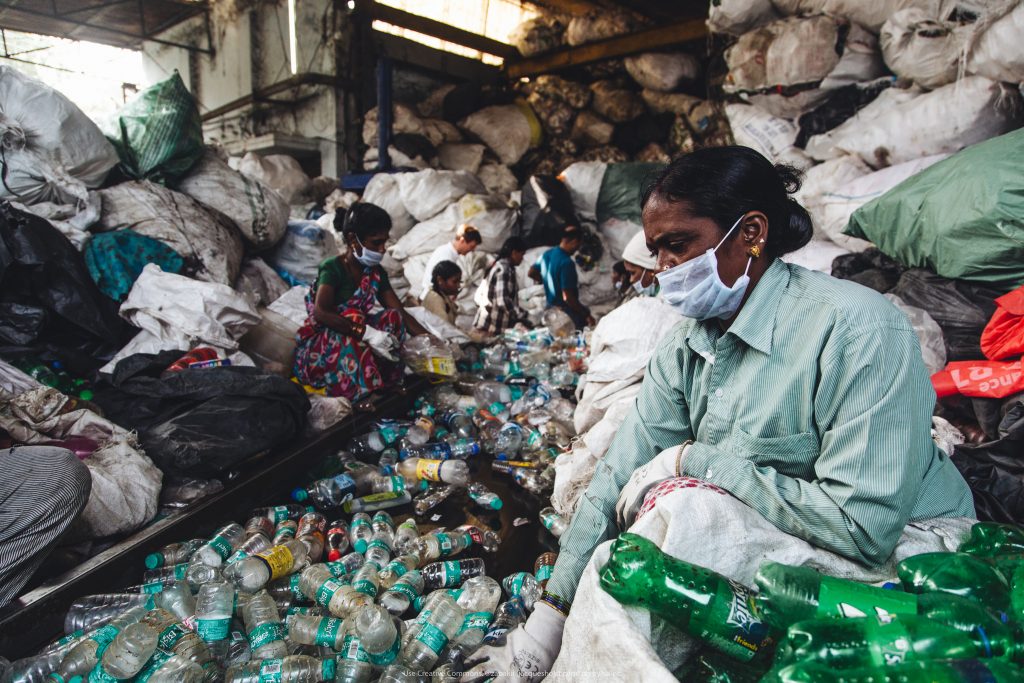
rePurpose work with vetted recycling projects tackling the waste crisis in India. A lot of the plastic they are removing from the environment is typically low-value plastic, which recyclers don’t often want to collect as it doesn’t bring them as much money. However, this plastic (such as crisps and chocolate wrappers) is incredibly polluting, especially when it reaches our oceans. rePurpose enables the ethical collection and recycling of this plastic, paying the waste workers a fair wage and giving them proper employment opportunities.
We are tackling a global issue, a lot of the UK’s waste is unfortunately exported to developing countries where it is sent to landfill or ends up in our oceans, so working with rePurpose is helping to finance crucial recycling infrastructure and improving wages and working conditions of waste pickers in India.
REDUCE
The next step is to gradually reduce our plastic footprint year on year. We are deeply committed to sustainability, so are searching for the most environmentally friendly options for our packaging. We know that sometimes removing plastic and replacing it with other materials isn’t always ultimately the best option for the planet. For example, plastic bags have the lowest carbon footprint of shopping bags, as long as they are reused many times, whereas a paper bag requires more energy to produce and isn’t as reusable. So when we look at reducing our plastic footprint, it is incredibly important to us that all environmental aspects are considered and the best option is chosen. We are working hard to find the best solutions, so make sure to keep reading our blog posts for more updates!
If you would like to work out your own plastic footprint, rePurpose have a simple calculator for you here and even have options for individuals to offset their personal footprints and become plastic neutral.
We’ve all been affected by the pandemic in some way. At Farrington Oils, most of our office is now working from home, which has allowed our production team and core office staff to remain on the farm producing food for you, safely.
We know how difficult it has been to be isolated from our friends and families. We have found, however, that food and cooking has bought us together, from afar. We’ve loved trying new recipes and sharing hints and tips with our followers, but we wanted to do more. So we set up a giveaway of 20 Mellow Yellow gift sets. We asked our followers on social media to nominate a friend, family member or neighbour that they missed sharing a meal with to receive one of these gift sets.
We were overwhelmed by the incredible nominations we received. Hundreds of heartfelt messages about key workers, missed family members and friends and those going out of their way to support others. We randomly selected 20 winners and sent a Mellow Yellow gift set to their nominee. After reading all the amazing nominations, we wanted to share some all the amazing winner’s stories.
Here are our winning isolation nominations…
- Samantha nominated her friend Karl as she was missing their weekly meals together.
- Chloe, who has been working so hard at her school looking after the children, was nominated by Tracey who is missing her and looking forward to when they can spend family time together again.
- Karin nominated her son Sam as he was supposed to be getting married this year to his lovely fiancee Kav but the wedding has had to be postponed.
- Cheryl chose to nominate her mother in law Maureen. Although Maureen is old enough to retire she has carried on working as a hospital cleaner, going in doing early morning shifts to make sure the frontline staff can work in a clean environment.
- Ann nominated her friend Louise as she has been there for her throughout lockdown.
- Jury was nominated by her daughter Gayatri for doing a fantastic job teaching throughout lockdown.
- Donald was nominated by his sister. Donald and his wife Gillian both work for the NHS in Scotland and love to cook.
- Ann nominated her neighbour Rosemary. They regularly share home grown produce and Ann is hopping Rosemary will bake her something with the oil in the gift set!
- Ian nominated his daughter Rebecca who throughout the lock down has been serving the general public in her role at Waitrose and also keeping an eye on her elderly neighbours to make sure they have everything they need.
- June wanted to nominate her daughter in law Sarah as a thank you for doing June and her husbands shopping and looking after them as they have been unable to leave the house due to being in the vulnerable category.
- Stephen nominated Leeann as he hoped it would help her get into baking and discover the wonders of banana bread.
- Fiona chose to nominate her friend Hannah who is kind, lovely and working hard for the NHS. Hannah works long hours as a nurse at a hospital in Dorset and Fiona is so proud of Hannah working through these difficult times. She is looking forward to their regular meet ups and meals with Lizi, Immie and Holly when this awful virus has cleared.
- Claire was nominated by Catherine as she is a frontline key worker who went into work on her day off to create a beautiful rainbow mural to lift spirits.
- Sam nominated Sara, his best friend, who turned 50 in March. They have had to put her birthday celebrations on hold until the lockdown is over.
- Mandy was nominated by Alan as she has spent lockdown cooking for her large family and deserved a treat.
- Christina nominated Elizabeth who is a key worker, filling our supermarket shelves day after day on long shifts. She is a mum of 3 and on top of that she does 3 lots of shopping for her elderly neighbours, baking cakes for them and sharing good advice to keep their spirits high.
- Kerry nominated her auntie Cheryl as she misses her lots.
- Peter wanted to give Andrea a pick me up as she on lockdown with a severe long term illness.
- Sharon was nominated for being an amazing friend and continuing to make everyone smile every day despite how hard it may be.
- Catherine was nominated by her Mum for her tireless commitment as a hospital doctor in central Birmingham, away from family and working in the thick of Covid-19 with a punishing work rota. She got engaged the day before lockdown, but sadly no opportunity for celebrations!
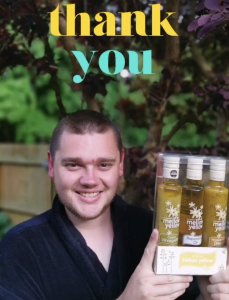
We hope everyone is continuing to stay safe and we look forward to being able to share meals with our loved ones again soon!
Here at Farrington Oils, we were incredibly proud to become the world’s first company to be certified as both carbon and plastic neutral earlier this year. As a small company, we were over the moon to have achieved a world-first! Especially as this ground-breaking achievement acknowledged our environmental credentials, something we all are very passionate about. As a business, Farrington Oils is now carbon and plastic neutral, so as employees we all felt that we could and should be measuring our personal carbon & plastic footprints and working to reduce our environmental impact.
Here we have a look at various members of the Farrington’s teams personal carbon and plastic footprints and hear how they have been working to reduce their environmental impact…
Rachel, Sales
Carbon: 5.04tonnes
Plastic: 69.59kg
I like to think I am a fairly careful person and try to avoid waste where I can, I like to cook from scratch, keep an eye on the heating and hot water and switch off lights that aren’t being used. With so much information in the media and with Duncan talking more about it at work, I have realised there is a lot that me and my family can do, small changes will add up to make a significant difference.
I’m a big tea drinker and at home fill the kettle and then work my way through the water in the kettle during the day, I was shocked when I realised how wasteful I was being with this and now only heat the water I need each time. I am gradually changing my family meals, we are already quite healthy but I want to move to a more sustainable diet, so we are eating more meat free meals, buying British meat from the local butcher whenever we can, and eating more fish from a sustainable source.
My plastic footprint was a big surprise – I eat a lot of fruit, salad and vegetables from the supermarket which are packed in plastic. I’ve found a link on my local council’s website to the company they use for our recycling and very detailed information on what can and can’t be recycled so I’m going to use this to improve the amount of packaging I recycle and to help make decisions when buying items based on their packaging. My local school has a recycling collection point for toothbrushes, toothpaste tubes and crisp packets too which I have started to use.
I’ve learnt recently that plastic bags can be reused until they wear out and use 3 time less energy than paper bags and 113 times less energy than cotton bags to make, they were invented for reuse but as a society we have decided to treat them like single use items rather than seeing the value in them, so I am also trying to focus more on the ‘reuse’ part of ‘reduce, reuse, recycle’.
Emily, Sales
Carbon: 8.21tonnes
Plastic: 64.28kg
I was really surprised that both my carbon and plastic footprint were so high. I no longer use single use plastic drinks and use refillable cups and water bottles. I buy food in larger packs, batch cook and freeze to reduce waste. I could go to a butcher that supplies meat in brown wrapping paper, but my local butcher uses plastic bags, which aren’t recyclable. I think producers, shops and supermarkets need to continue to work on giving consumers more sustainable options. I also ensure that all my electric appliances are A grade and all my light bulbs are low energy.
Becs, Technical
Carbon: 9.23tonnes
Plastic: 58.63kg
I have a lifelong interest in sport and health and in recent years the natural progression from this has been to extend into a consideration for the environment and sustainability through an appreciation for energy expenditure and time spent enjoying the outdoors on my feet or bike. Though I have also recently come to realise that I have a genetic trait to see the value in all things and materials based on an unwanted tendency to hoard!
Sustainability was a factor in my decision to become vegetarian 10 years ago and also attracted me to working at Farrington Oils. At times my other interests such as seeing more of the world conflict with sustainability – international travel is definitely the largest of my footprints. I will make a conscious effort look at options to reduce this / offset in the future. On a smaller scale I am lucky that I enjoy cycling will continue to commute to work by bike (a 25 mile round trip) when I can – aiming for an average of twice per week over the year.
My next effort will be to reduce my consumption of convenience drinks whether hot or cold. With good planning I should be able to reduce this, though I will struggle to not see a convenience drink as a treat and will need to be creative to find ways to achieve this sustainably.
Gina, Marketing
Carbon: 5.91tonnes
Plastic: 44.73kg
My house is the highest part of my carbon footprint. Being a very old house with a fairly old boiler, it probably isn’t the most energy efficient. But I have had a smart meter and smart thermostat installed so I can keep a track of energy usage and ensure the heating is not on when it isn’t needed.
I’ve been trying to reduce the plastic footprint of my food shops by making much more from scratch. During the colder months, I make soup each week for my lunches (storing it in reusable containers), I’ve been making my own sourdough bread (with flour bought from a refill shop near to my house) and generally trying to make as much from scratch as I possibly can so I only need to buy fresh ingredients which helps reduce packaging (especially when buying loose fruit and veg). I have also swapped my shampoo in plastic bottles for plastic-free, vegan shampoo bars from Lush.
I now take a reusable water bottle and reusable coffee cup out with me so I never need to buy drinks in disposable packaging. Once you get into the habit of doing things like this, it’s actually super easy, plus, many coffee shops offer discounts when you use your own cup!

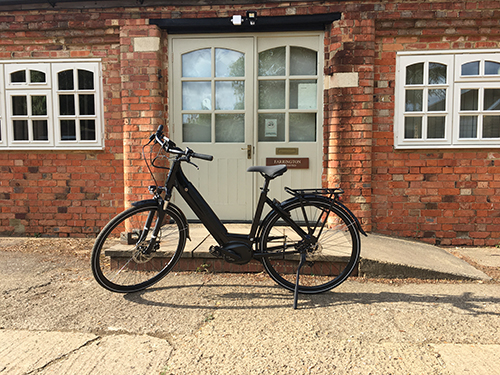
Living sustainably is important to all members of our team, we even have Steve and Kevin lift sharing every day to halve the carbon footprint of their commute and Jo drives an electric vehicle to work a few days a week and has purchased an electric bike to cycle to work in the warmer months. Of course, Duncan’s commute is the most environmentally friendly, as he walks 5 minutes from his front door to the office, truly net-zero!
As we all work to continue to reduce our carbon and plastic footprints, plus produce our award-winning carbon & plastic neutral cold pressed rapeseed oil and dressings, we hope to see more companies taking these steps to look after our environment! If you would like to work out your own environmental impact, the carbon footprint calculator is here and the plastic footprint calculator is here. Let us know your sustainable tips by getting in touch on Facebook, Instagram, Twitter or email.
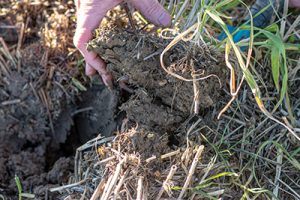
Soil health is a big part of sustainable farming and I have been measuring this on one of my fields since 2002. Among the great soil nutrition and health improvements seen in this field due to my sustainable farming practices, I have farmed in a way that has increased soil organic matter (SOM) which has a direct impact on reducing atmospheric CO2 levels. Between 2002 and 2020 I have seen my SOM increase from 3.8% to 6.7% which is a significant amount when talking about soil!
What is Soil Organic Matter?
Soil organic matter is the organic part of soils consisting of plant and animal detritus at various stages of decomposition. Think of dead leaves off trees, straw left behind after crops have been harvested, decaying soil microbes and insects, or old plant roots in the soil.
The organic matter is made up of cells and molecules containing lots of carbon and it can be lost from soils over the years through natural processes, which is sped up if soils are moved intensively, mixing with oxygen in the atmosphere and released as carbon dioxide (CO2). Commonly this occurs when a field is ploughed.
We no longer plough our fields and have worked hard on our sustainable farming methods to keep the carbon in the soil. In the right conditions SOM can be increased over the years, as plants grow, taking carbon dioxide out of the atmosphere to create plant material through the natural process of photosynthesis. The process of taking CO2 out of the atmosphere and storing in the soil is called carbon sequestration and the soil becomes a carbon sink as it reduces the levels of CO2 in the atmosphere.
Soils have the ability to be fantastic carbon sinks when looked after. In fact, coal and mineral oils that are mined from the ground (fossil fuels) are carbon that has been stored from hundreds of millions of years ago, formed from decayed plants and animals that once grew and roamed the earth.
How does this relate to our farm?
On my field called ‘Below the Black Barn’ the increase in soil organic matter has removed CO2 from the atmosphere, locking it in the ground which is great for reducing global warming as well as making the soil more nutritious for the plants to grow in. The figures are very impressive. We know that for every 0.1% increase in SOM, around 8.9 tonnes of CO2 are sequestered on every hectare of land.
But what does this actually mean?
If my field has increased the total SOM by 2.9% over 18 years, it has absorbed around 258 tonnes of CO2 per hectare (ha), or 14.34 tonnes per ha per year on average. One hectare is around the same size as one and a quarter football pitches.
To put this into context, driving a 1.5lt petrol Mini (our Mellow Yellow Mini) car produces 117g of CO2 per Km. So, for every hectare of our field we are absorbing enough CO2 to off-set nearly 122,554km of motoring, which is equivalent to over 10 years driving for the average motorist!
Let’s look at the whole farm…
This is just off one hectare, but Below the Black Barn Field has a cropped area of around 20ha and our whole farm cropped area is around 272ha. Therefore, from the way we farm our soils, we are sequestering an impressive 3900 tonnes of CO2 per year, off-setting enough CO2 to fly one person 500 times around the world in economy class! (or take 2,778 cars off the road) each year.

The story does not end with the cropped area
We have a medium sized family farm, which not only includes the cropped area, but all the other bits we do around the edges of our fields as part of our LEAF farming and sustainable farming practises. These include areas of woodland and hedges, a grass meadow, areas of native wild-flowers and grass margins. Over the years we have planted well over 8,000 metres of new hedges and over 8,000 native trees on the farm to add to the existing trees and hedges. All these conservation areas can be calculated to sequester a further 240 tonnes of CO2 per year, as well as being areas for wildlife to thrive and prosper.
In summary on our medium sized family farm in Northamptonshire, following our LEAF and sustainable farming principles of a common-sense approach to sustainable agriculture and soil management, we are absorbing over 4,100 tonnes of CO2 per year, which is equivalent to an awful lot of car journeys or air miles. If all farmers around the world were to farm in a similar manner, there is the potential to offset all the global carbon emissions created by global transport, which is about 30% of the carbon dioxide emitted. Or another way of looking at it, by increasing soil organic matter content from 1.7% to 5.2% on agricultural land globally, would take 1 trillion tons (0.9 trillion tonnes) of carbon dioxide out of the atmosphere, bringing it down to pre-industrial levels.
The good news is that we are not the only people practicing some fantastic sustainable farming techniques growing quality crops, livestock and wildlife habitats on our farm. As well as pressing rapeseed grown on our farm, we buy seed off four other LEAF Marque farmers who are just as passionate as we are in the way they farm. So, between us we are all doing our bit to preserve and protect the planet for future generations.
Further reading, in no particular order:
Montgomery. D.A, 2017. Growing a Revolution, Bringing our soil back to life. (Available from Amazon here.)
www.indigoag.com/the-terraton-challenge
www.co2.myclimate.org/en/flight_calculators/new
www.soilquality.org.au/factsheets/organic-carbon
The environment has always been at the heart of everything we do, which is why LEAF (Linking Environment And Farming) is so important to us. As a LEAF Demonstration farm and LEAF Marque producer, we are so proud of the work the LEAF team do to encourage other farmers to take a more sustainable approach to their farms.
Here, Caroline Drummond, Chief Executive of LEAF (Linking Environment And Farming) talks about early beginnings, driving forward more sustainable farming and connecting communities…
Our Roots
LEAF celebrates its 30th anniversary next year. We began life in 1991 with a tiny office at the Royal Agricultural Society of England (RASE) at Stoneleigh Park, Warwickshire and one very ancient computer! Initially set up as a three-year project, with seed funding for only three years, we had to become self-financing. And we did just that! The focus in those early days was to set up a national network of LEAF Demonstration Farms – to showcase sustainable farming in action. We launched five farms in that first year and created a membership offer that farmers could sign up to.
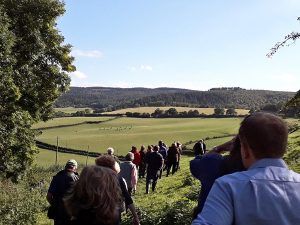
LEAF was set up to do two things: to promote sustainable farming through Integrated Crop Management (ICM) which, as more livestock farmers came on board, later became Integrated Farm Management (IFM) and secondly, to raise public awareness of what farmers were doing to farm with environmental care. LEAF has grown to become a global leader in delivering more sustainable farming and those two objectives remain as true today as they did then.
Sustainable Farming Through IFM
Consumers increasingly want to know more about what they feed their families; they want to eat healthily; they want to know where their food has come from and how it was produced; they want assurance of its sustainable credentials. As people started to visit our growing network of Demonstration Farms, they were asking where they could buy food they were seeing bring grown. This heralded the beginnings of LEAF Marque – our environmental assurance system.
Today we work in 27 countries with over 900 LEAF Marque certified businesses worldwide and over 40% of UK grown fruit and vegetables is grown on LEAF Marque farms. Farrington’s Mellow Yellow were one of the early trailblazers as both a LEAF Demonstration Farm and one of the earliest adopters of LEAF Marque – the first rapeseed oil to be LEAF Marque certified!
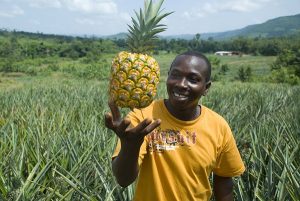
We are hugely proud to have worked with the Farrington’s team over so many years. Their commitment to LEAF and all we stand for, has recently been demonstrated with them becoming the world’s first carbon and plastic neutral food brand.
Building Connections
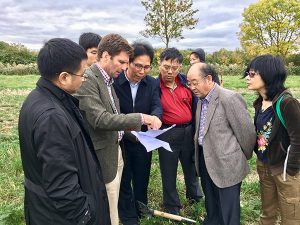
People have always been at the heart of LEAF’s vision of a world that is farming, eating and living sustainably. Building knowledge and understanding of sustainable farming helps highlight the connections between all living things – soil, plants, animals and people. This understanding gives rise to an attitude of responsibility and care. As a LEAF Demonstration Farm and LEAF Open Farm Sunday host farmer, Farrington’s Mellow Yellow welcomes people from all walks of life to experience farming first hand. Bringing people closer to farming and how their food is produced is opening people’s eyes to the importance of sustainable farming and, in turn, encouraging them to make more sustainable food choices.
The way forward
Reflecting over nearly three decades, LEAF has come a long way! We haven’t achieved this growth alone. There is no magic bullet to optimising sustainable food production. It requires collective efforts of farmers, governments, retailers, NGO’s, scientists and individuals. All of us working together to achieve shared outcomes – more productive soils, cleaner water and air, greater biodiversity, efficient energy use and improved connections with people, farming and the natural world.
The partnerships LEAF has built over its nearly 30-year history will be key as we navigate the next critical few years.